Don’t judge each day by the harvest you reap but by the seeds you plant. – Robert Louis Stevenson
Have you ever taken the time to admire the prowess of a tree? They stand still but, at the same time, are always in motion; they are enormous and colorful, perfect for taking a picture to remember for a lifetime; they can provide fresh air and a relaxing shade to pass the time; they are very similar but also very diverse, as trees represent a different meaning for every living being in the world; trees face challenging times and still thrive; they have a perfect architecture that reflects the perfection of nature.
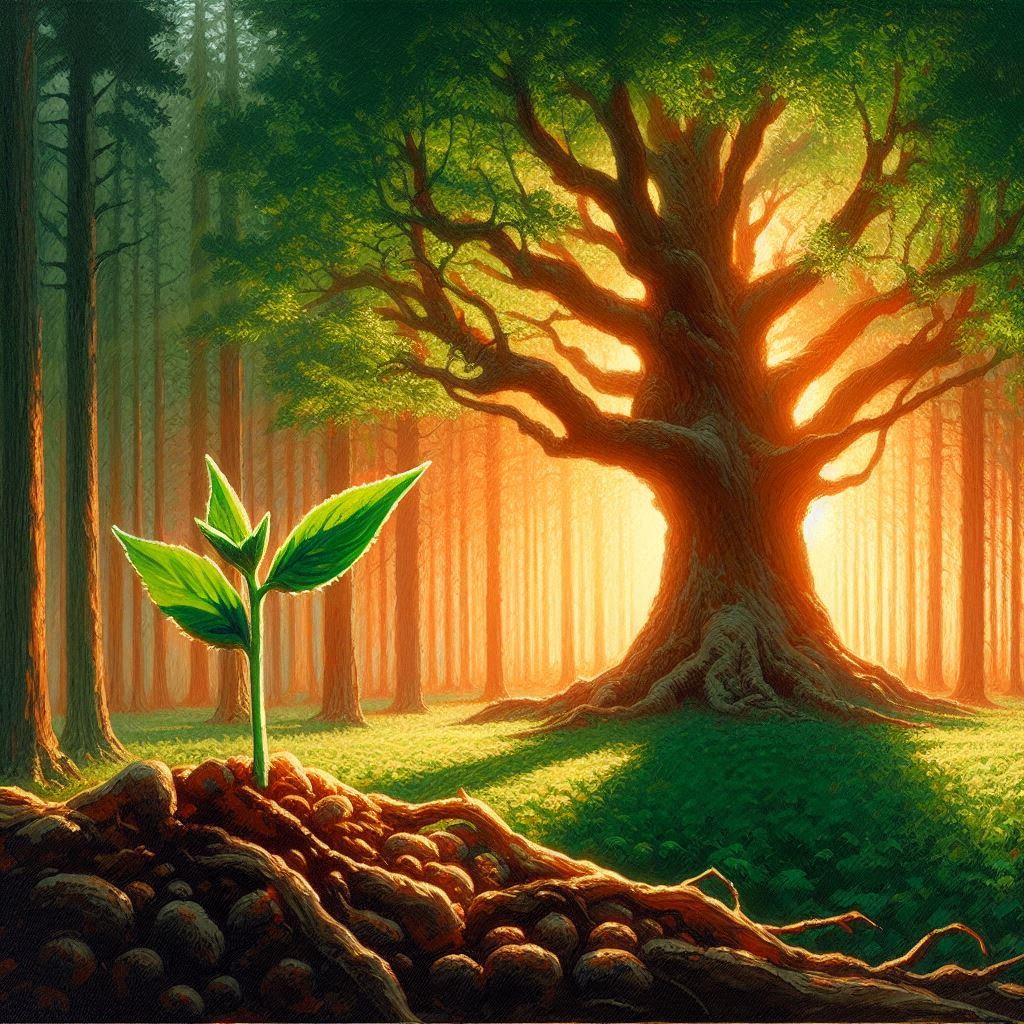
It is clear that these creations of nature–trees–have a great impact on the world that goes beyond what we can initially imagine; however, where do they come from? They just don’t appear in the fields, they have to grow, but first they have to be watered, and initially… cultivated. Therefore, what is a tree then? It is the slow explosion of a seed.
When we plant a seed, it becomes something bigger, it explodes into a beautiful structure that will have a greater impact on the world. Maybe, we will never see what we planted, but the world will feel its impact, that’s for sure.
Kindness, the analogy
Kindness is a word that can mean different things to diverse people. According to the Cambridge Dictionary it means “the quality of being generous, helpful, and caring about other people.” However, the real applicable meaning is how you choose to show it (be it through empathy, acceptance, kind gestures, thoughtfulness, the possibilities are entirely up to you1).
Kindness does not have to be something big, it can be small, like a little seed that we know will eventually bloom. Kindness is a seed then, and we can see ourselves as farmers, as cultivators of a kinder world. Our life is the field, every interaction is an opportunity because the seeds of kindness can be planted at any moment; this means that we can even sow them in ourselves, in the way we talk and treat our mind and body.
If you want to be beautiful, then make beautiful choices. – Epictetus
A seed that exploded
In a small town in Mississippi, a young adult named Larry Stewart was struggling with poverty2. He was living paycheck to paycheck until his employer went out of business; this unfortunate event caused him to live in his car, covering himself with his laundry in an effort to stay warm while hoping to forget his hunger. At one point, he did not eat a regular meal for two days, which made him desperate; therefore, he entered a restaurant without any money, planning to dine and dash. By the time he finished his food, he started to act nervous and anxious, the situation caught the attention of the owner, Ted Horn, who immediately understood Larry’s plight. What Ted did was plant a seed of kindness as he pretended to find a $20 bill on the floor behind Larry, saying: “I believe you dropped this.”
Larry was so grateful that he made a vow to himself: “As soon as I am able, I will do something for others like what the owner has done for me.” Later, Larry earned considerable wealth in the cable television industry and the phone services industry in Kansas City. He began anonymously handing out $100 bills to people in need during the holiday season. From 1979 through 2006, he became known as “Kansas City’s Secret Santa,” distributing over $1.3 million.
Ted Horn, the owner of that restaurant in Mississippi, planted a little seed of kindness in Larry and that seed was watered by gratitude, which allowed it to grow and multiply into more and more acts of generosity.
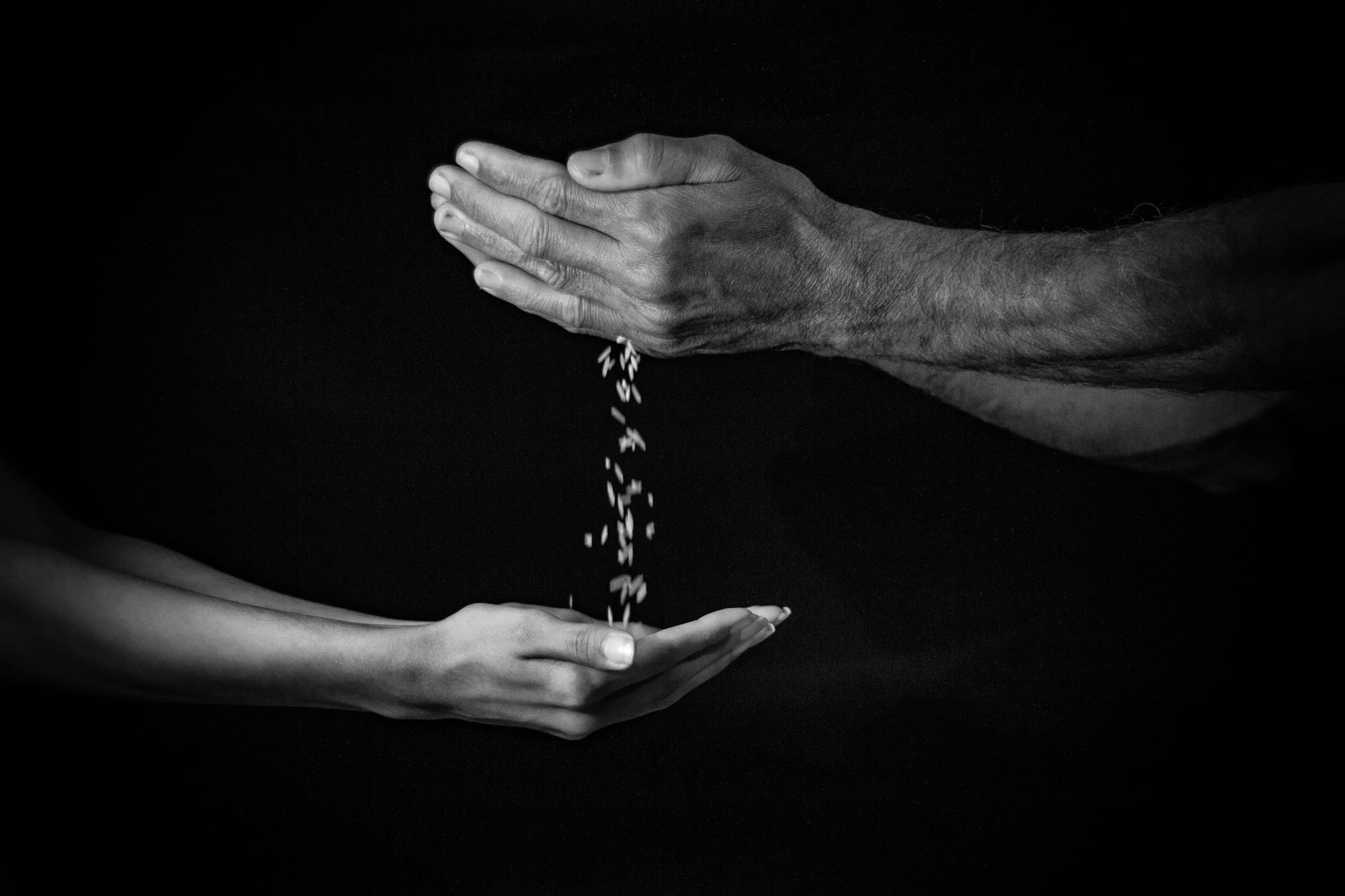
Oxytocin: the feel-good chemical of contribution
Acts of kindness not only help others–they help you, too. According to an article published by The Neuroscientist3, when we engage in prosocial activities (a wide range of positive social behaviors, including trust, cooperation, care, empathy, and altruism–all of which are mainstays of forming and maintaining adaptive human social relationships), we increase our oxytocin levels. Oxytocin is the chemical associated with social bonding and attachment.
Not only that, when we commit to prosocial activities we can:
- Increase social bonding: Acts of kindness can strengthen social bonds and create a sense of connection with others.
- Reduce stress and anxiety: By promoting feelings of calm and relaxation.
- Improve mood: Acts of kindness increase feelings of happiness and well-being by releasing endorphins, also known as “feel-good” chemicals.
- Increased empathy: Kindness fosters greater understanding for others, leading to more harmonious relationships.
Oxytocin is also known as the “kindness hormone,” and it belongs to the group of “feel-good chemicals.” It plays a crucial role in promoting kindness, reducing stress, and enhancing social connections, making it a key factor in our emotional and psychological well-being.
Therefore, acts of kindness have profound benefits for both the giver and the receiver, as both improve mental health, increase happiness, and create a ripple effect of positivity. By embracing generosity, we contribute to our own well-being and foster a more compassionate and supportive community.
Seeds of kindness
The Seeds of Kindness are the small actions we do for others–they are little seeds that we plant by being generous and compassionate. We can watch them grow instantly (perhaps by seeing someone smile), or they can have a slower process and lead to another act of kindness.
Have you seen the shape of a tree’s seed? It has a little leaf-like structure that helps it drift when it falls, allowing nature to spread4. In the same way, we are spreading kindness. We are expanding this culture of kindness, creating a bigger effect that will have a great impact on the world.
Just as we feel the impact of trees, the world will feel the impact of your kindness. Your seeds will help to cultivate a more beautiful world.
🎫 Your ticket to improvement
One of my main beliefs is that we read to acquire knowledge, but it is worthless if we never apply it into our life, as Ryan Holiday states: “The goal is to put these words into works.” And that “work” could literally be anything: self-reflection, improvement, the start of an action, start crafting an idea, or words in your journal.
Therefore, I will ask you to see yourself as a “scientist of self-improvement,” one that seeks to find the formula to turn that spark into blazing fire. Or a “data scientist” who is gathering information from any place to build a “highest version mathematical model.” So, create your hypothesis and do your experiments to validate if these actions work for you. Go to your Lab and start crafting (by the way, I have a free Excel called “The Lab5,” which is designed for these experiments).
Without further ado, take your ticket 🎟️:
Planting your seed
Just like a tree starts from a seed, your personal growth begins with small, intentional actions. By also extending kindness to others, you contribute to a more compassionate world—one small seed at a time.
- Action (to yourself)
- Identify one negative way you talk to yourself (e.g., “I’m not good enough,” “I always mess up”) and replace it with a kind and encouraging phrase (e.g., “I am growing and learning,” “I am capable”). Repeat this throughout the day.
- Action (for others)
- To symbolize your commitment to growth, do a small act of kindness today. It could be as simple as offering a genuine smile to a stranger, leaving an encouraging note in a public place, or sending a supportive message to a friend.
You can be sure that the seeds you plant today will explode into beautiful trees, they will help the world to be more colorful.
Footnotes
- If you want to learn more about different meanings, here I leave the page of the “Inspire Kindness” movement: https://inspirekindness.com/blog/kindness-101 ↩︎
- You can find the complete story by clicking here. ↩︎
- Marsh N, Marsh AA, Lee MR, Hurlemann R. Oxytocin and the Neurobiology of Prosocial Behavior. Neuroscientist. 2021 Dec;27(6):604-619. doi: 10.1177/1073858420960111. Epub 2020 Sep 26. PMID: 32981445; PMCID: PMC8640275. ↩︎
- Take a look at their shape and why they have it here. ↩︎
- If you would like to get your Lab Excel completely for free, all you have to do is to subscribe to my Substack or to my newsletter “Ingenium.” ↩︎
Viventem gradatim; gradatim ferociter
 Sebas Bravo